
More Than Child's Play
The clinical case for play-dough · Children and adolescents
The humble tub in your drawer is one of the most versatile, evidence-informed tools in child and adolescent therapy. Dr Anna Cohen walks you through the controlled research, the neurobiology of why it calms, and a formulation-led toolkit you can use on Monday, with worked case vignettes from age five to sixteen.
The dough is just dough. The formulation is the clever part.
Start watching straight away · 12 months' access · Certificate of completion
Presented through the Clinical Psychology Resource Centre: evidence-informed clinical training built for practitioners who want skills they can use from their very next session.
About the CPRC →It's been in your drawer all along.
When a colleague spots a tub of play-dough on your shelf, the easy assumption is that it's there to pass the time, something to keep little hands busy. This webinar makes the clinical case for it: a serious therapeutic tool with a real evidence base, clear mechanisms, and one non-negotiable: everything is guided by your formulation of the child in front of you.
The assumption
"It's a time-filler." Something for the waiting room, not the treatment plan.
The reality
Controlled trials on mood, anxiety, depression and emotion regulation, including a randomised trial where clay outperformed a stress ball, and physiological evidence in adolescents.
The gap is knowing why it works, when to reach for it, and for whom. The same activity is brilliant for one child and contraindicated for another. The formulation tells them apart.
Not a time-filler. A measurable effect.
The research is presented straight: what it shows, and where it stops. Most of it is on clay rather than commercial dough, much of the sampling is adults, and several studies are small or lack an active control. The defensible position, stated plainly: play-dough is not an empirically supported treatment for any disorder. What the evidence supports is that malleable media reliably support mood, reduce anxiety and improve emotion regulation, as a component within a properly formulated plan.
Clay beat a stress ball
102 adults, negative mood induced, randomised: clay work improved mood significantly more than a matched, hands-busy comparison. Kimport and Robbins (2012).
Play itself is a change agent
93 controlled studies of play therapy: a large overall effect, strongest for relationship-based approaches and biggest when parents are involved. Bratton, Ray, Rhine and Jones (2005).
Physiological evidence in teens
Adolescents randomised to clay art therapy showed improved emotion regulation, with hair-cortisol findings the authors read as consistent with genuine health benefit. Nan, Huang and Kang (2023).
It beat an active control
Six sessions of clay art therapy against a matched visual-art comparison in adults with major depression: the clay group showed greater symptom reduction and gains in emotion regulation. Nan and Ho (2017).

Dr Anna Cohen
Senior Clinical Psychologist · Board-approved clinical supervisor · Co-founder, CPRC
Learn it from a clinician who uses it every week. Co-founder and Clinical Director of Kids & Co Clinical Psychology, with close to three decades of clinical practice with children, adolescents and families, and a lifelong soft spot for the tub of dough on the shelf.
Anna co-founded the Clinical Psychology Resource Centre with Isabel Fraser, Clinical Psychologist and board-approved clinical supervisor, because they kept meeting clinicians who were theoretically well trained but wanted practical, translatable tools to bring into the room with complex children and families.
Six modules. Theory first, then your hands.
An invited pause point sits at the halfway mark: ten minutes, and one job: go and find a pot of dough or putty, because the whole second half is hands-on. Tap a module to see inside.
Module 1The case for a humble mediumTheory
The modelling-media family, free play as a change agent, and the non-negotiable: the five P's of formulation guiding every activity.
Module 2The evidence baseTheory
The controlled research on mood, anxiety and emotion regulation, from self-report to physiology, and the honest limitations.
Module 3Why it calmsTheory
Bottom-up before top-down (Perry), proprioception and the polyvagal lens (Porges), and the Expressive Therapies Continuum.
Module 4Perfectionism and flexibilityHands-on
The medium that insists good enough is allowed: the eyes-closed challenge, deliberate imperfection, and ACT's psychological flexibility in the hands.
Module 5Worries, thoughts and feelingsHands-on
CBPT and ACT through the dough: thought bubbles, scaled worry balls, squish-and-name, plus a twelve-prompt menu, and the trauma caution that protects it all.
Module 6Families, adolescents and safetyHands-on
Sending the dough home, groups and classrooms, the adolescent translation kit, and set-up, allergens, sensory aversion and contraindications.
Seven worked vignettes run through the webinar, every child and adolescent a de-identified composite, so you see the formulation choosing the activity, not just the activity: Mia, 6, whose first full sentence of therapy arrives through her hands; Archie, 5, and Tom, 15, one bottom-up mechanism in two packagings; Lily, 14, and the exam-season clay week she rebuilds ("uglier, but fine"); Noah, 8, whose separation worry becomes three sortable objects; Jai, 7, where the trauma formulation vetoes the smash and chooses transformation; and Sana, 16, whose grief lands in one small clay teacup.
"The dough is just dough, and the formulation is the clever part. But the magic is simply two people, side by side, making something together while one of them quietly works out that they're braver than they thought."DR ANNA COHEN · CLINICAL PSYCHOLOGY RESOURCE CENTRE
For clinicians who work with children and adolescents
This is for you if...
You work with young people
Psychologists, counsellors, social workers, school wellbeing clinicians and allied professionals working with children and adolescents.
You want tools for Monday
Practical, evidence-informed activities you can use in your very next session.
You work across ages
The vignettes run from five to sixteen, with a dedicated adolescent translation kit.
You want to explain why
You value being able to explain why something works, to parents, teachers and referrers.
Good to know: this is skills-informed professional development for generalist practice; it doesn't certify you in play therapy, art therapy or any named method. Deliver the work within your own scope, training and supervision. All clinical examples are de-identified composites. You'll want a tub of dough or putty handy for the second half and the at-home task.
Walk away able to use it on Monday
- Locate play-dough within the evidence on the therapeutic powers of play
- Summarise the controlled research on mood, anxiety, depression and emotion regulation, honestly, limits included
- Explain the tactile and proprioceptive mechanisms that make it calming, to a parent, a teacher or a sceptical GP
- Design structured activities for perfectionism and psychological flexibility
- Integrate dough into ACT and cognitive-behavioural play therapy for worries, thoughts and feelings
- Adapt every activity for adolescents: putty, clay and the four-move translation kit
Certificate of completion issued once you confirm completion of the webinar and the four core parts of the at-home task. A structured CPD activity for your records; please confirm with your professional association the most appropriate CPD category for your registration requirements.
Start watching in the next five minutes.
Pull out your play-dough, but picture the child first. 2.5 hours, six modules, seven vignettes, one non-negotiable: the formulation chooses the activity.
One payment · watch on demand, at your own pace · 12 months' access from purchase
Get instant accessGroup registrations (3 or more): contact us for a discount code.
What's included
- 2.5-hour on-demand webinar with Dr Anna Cohen: a 42-slide deck across six modules
- Seven worked case vignettes, ages 5 to 16
- Participant slides to download and keep, including the twelve-prompt menu, the at-home task and the full APA 7th reference list
- 30 to 60 minute structured at-home task, best completed within a week
- Certificate of completion (2.5 CPD hours)
- Access to the CPRC clinician community for ongoing support
Questions before you buy? Email [email protected]
Never sit with a hard case alone.
The real growth doesn't happen during the webinar; it happens in the months afterwards, with a real child, a real family and a real, messy case. Bring your at-home task (the five-P formulation and session plan) straight to your first group.
A standing fortnightly room
Six 90-minute sessions per quarter. Bring your live cases, including this week's dough work, and think them through with a small group of child clinicians.
Led by Dr Anna Cohen and Isabel Fraser
Both board-approved clinical supervisors, across the full CPRC child, adolescent and family programme.
Complements your formal supervision
Billed quarterly; pause or cancel before any future quarter. Check your registration requirements for how group supervision fits your situation.
Membership is $1,195 a quarter (about $199 a session), or $995 for your first quarter when added with this webinar, saving $200, with later quarters at the standard rate.
Enquire about the GroupRight at the start of your career?
Ask about the New Graduate Supervision Group ($2,500 for twelve weekly sessions), or the full CPRC certification pathway ($12,850, or $11,000 paid upfront).
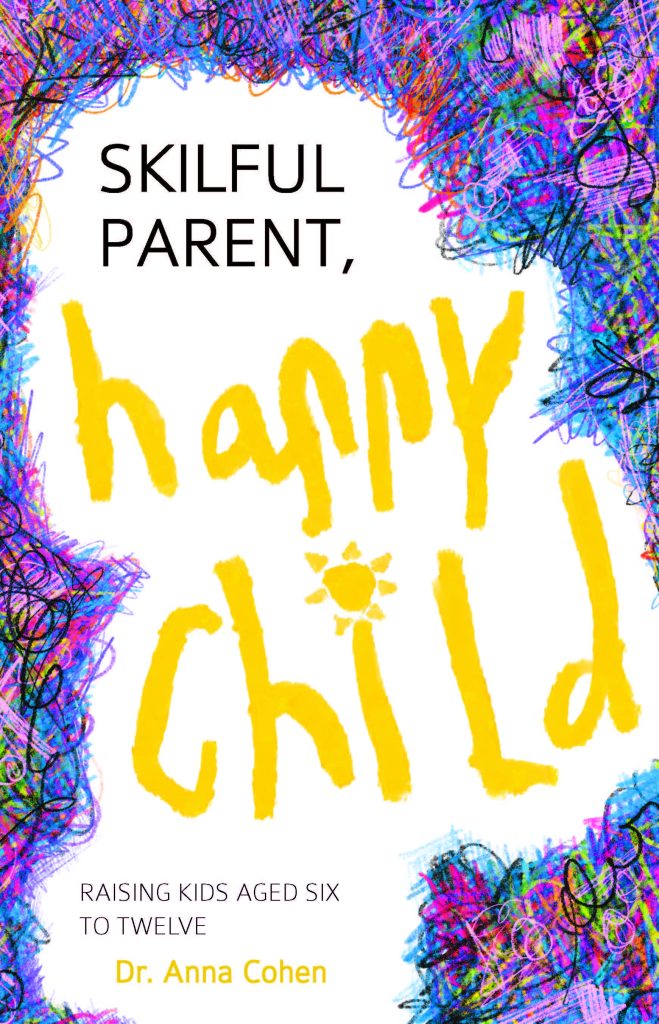
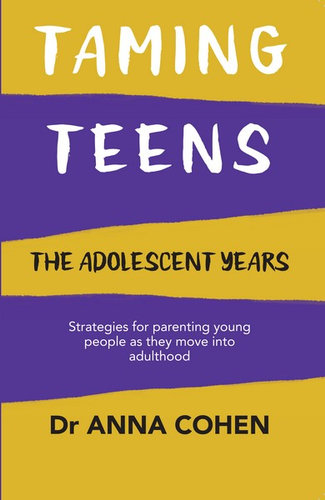
Books you can hand to families
Dr Anna Cohen's parenting books share the regulation-first thinking behind this work, and cover the ages the webinar's vignettes span.
Good to know before you press play
Is this live, or can I watch anytime?
It's fully on demand. Watch whenever suits you, pause at the built-in pause points, and rewatch any module. There's a suggested ten-minute break at the halfway mark, with one job: go and find a pot of dough.
Do I get a CPD certificate?
Yes. Your certificate is issued once you confirm completion of the webinar and the four core parts of the structured at-home task: about 30 minutes, best completed within a week of watching, while it is still fresh. The two extension parts add a further 30 minutes and are strongly encouraged. Please check with your professional association to confirm the most appropriate CPD category for your registration requirements.
Is it really suitable for adolescent work?
Yes, deliberately. The strongest physiological study in the field is in 15 to 17-year-olds, the vignettes run to age sixteen, and Module 6 includes a four-move adolescent translation kit (rebrand the medium, change the geometry, raise the symbolic level, hand over the analysis), drawing on Geldard, Geldard and Yin Foo's Counselling Adolescents.
Do I need any materials?
Just a tub of soft play-dough or therapeutic putty; a good bought one is completely fine. You'll want it for the hands-on second half and for the at-home task.
Does this certify me in play therapy?
No, and we're careful about that. It's skills-informed professional development for generalist practice: it supports and extends your competence, delivered within your own scope, training and supervision. It does not certify you in play therapy, art therapy or any named method.
How long do I have access?
Your access arrives on enrolment, and the full recording and participant slides are yours for 12 months.
Is ongoing supervision available afterwards?
Yes. The CPRC runs an Ongoing Supervision Group: a fortnightly, supervisor-led small group (six 90-minute sessions a quarter) where you bring real cases, including this week's dough work. Membership is $1,195 a quarter (about $199 a session), or $995 for your first quarter when added with this webinar, with later quarters at the standard rate; billed quarterly, no lock-in. It complements your formal supervision; check your own registration requirements. To enquire, email [email protected].
Can my team or service watch it together?
Pricing is per participant so everyone receives their own certificate and materials. For team or service access (3 or more), contact us at [email protected] for a discount code.
Pull out your play-dough, but picture the child first.
$220 AUD, instant access, CPD certificate on completion.
Get instant access for $220