
Piece by Piece
Using collage therapeutically with children and young people
The child who cannot say it can almost always show it, with a pile of magazine images, a pair of scissors and a glue stick. Collage lets a guarded young person put the inside on the outside, one piece at a time.
Most of us were never taught how to make a craft activity therapeutic. This webinar gives you the thinking that turns cutting and arranging into clinical work: a safe arc from settling to grounding, anchored in Emotional Release Counselling and a child-led, developmentally pitched process.
Because a child's story rarely arrives whole. It comes in fragments we help them gather, arrange and, piece by piece, make sense of.
Start watching straight away · 12 months' access · Certificate of completion
Presented through the Clinical Psychology Resource Centre: evidence-informed clinical training built for practitioners who want skills they can use from their very next session.
About the CPRC →Ask them to talk and you hit a wall. Ask them to draw and you hit "I can't draw."
Collage slips past both. The images already exist, beautifully made, so the perfectionism that shuts a self-conscious child down has nothing to grip onto.
Used thoughtlessly, collage is just a craft. What turns it into therapy is the thinking underneath it: why ready-made images suit the developing child, how to sequence the work so feeling is opened and then safely closed, and how to stay curious rather than rushing in to interpret a child's picture.
Done without that structure, expressive work can open more than a session can hold: raising feeling with no plan to settle it before the child leaves, or sliding into reading meanings into an image that were never the child's own. The activity has to serve the nervous system, never the other way around.
After close to three decades working with children, adolescents and families, Dr Anna Cohen built this webinar around a clear, repeatable arc (settle, externalise, express, integrate, ground) and a repertoire of collage methods you can match to the child in front of you, with the exact words to use.

Dr Anna Cohen
Senior Clinical Psychologist · Board-approved clinical supervisor · Co-founder, CPRC
I have worked with children, adolescents and families as a Clinical Psychologist for close to three decades: in private practice, in group programmes, and across multidisciplinary teams. Across that work, the same thing keeps proving true: the children who can show us far more than they can tell us do their best work with their hands.
Expressive media (collage, sand and symbol, drawing) are among the most powerful ways in, once you hold them inside a clear clinical frame. That shift, from running a craft activity to doing genuine therapeutic work, is what this webinar is built to teach.
I co-founded the Clinical Psychology Resource Centre with Isabel Fraser because we kept meeting clinicians who were theoretically well trained but wanted practical, translatable tools to bring into the room with complex children and families. That is what the CPRC exists to provide.
What we'll cover together
A structured 2.5-hour pathway: from why collage works developmentally, through the theory and the honest evidence, to setting up a safe arc and a full repertoire of methods you can use across the age range. Tap a module to see inside.
Module 1Why collage?0:00 to 0:20
What therapeutic collage actually is, and why ready-made images suit children and teens: dissolving "I can't draw", offering distance, handing over control, and making identity and feeling concrete.
Module 2Foundations: ERC, the child-led process and the ETC0:20 to 0:45
Emotional Release Counselling's release-then-integrate movement, Geldard's child-led and media-matched process, and the Expressive Therapies Continuum: from the hands, to feeling, to meaning.
Module 3What the evidence does and doesn't say0:45 to 1:10
An honest map of the art-therapy evidence base for young people and its genuine limits, and how to stand on mechanism (body, image, the continuum) without overselling collage to a referrer.
Module 4Setting up and the safe arc1:20 to 1:45
Curating an inclusive image-world, and the spine of every session (settle, externalise, express, integrate, ground) with titration and grounding to keep the child inside the window of tolerance.
Module 5Core collage methods, with demonstrations1:45 to 2:15
Identity collage, the feelings and body map, the worry collage, the future-self and hope collage, and layered work: each with word-for-word lines and a full worked demonstration, facilitated with curiosity, not interpretation.
Module 6Adaptation, ethics and risk2:15 to 2:30
Adapting collage for families, groups and telehealth; consent, ownership, culture and risk; working within scope and supervision, plus the closing discussion.
Fifty-two slides, with a ten-minute break at the midpoint. Gather magazines, scissors and a glue stick before you press play again: a hands-on exercise opens Module 4. The close carries six reflection questions to work through with one young person in mind, the five questions clinicians ask most, and a full APA 7th-edition reference list. Nine de-identified composite young people run through the session (Grace, 9; Maya, 14; Leo, 8; Charlie, 8; Mia, 7; Jordan, 15; Tahlia, 15; Ruby, 13; and Noah, 15), several of whom you may recognise from other CPRC titles. A further half hour after the close builds one real collage tool for one real young person.
"We don't decode the child's picture. We help them narrate it, and let the image hold what words can't yet."DR ANNA COHEN · CLINICAL PSYCHOLOGY RESOURCE CENTRE
Built for clinicians who sit with children who can't quite say it
If any of these sound familiar, this webinar is designed for you.
You treat children and adolescents
Psychologists, counsellors, social workers, mental health OTs and allied health professionals working with children and young people.
You want a way past "I can't"
The guarded teenager, the child with no words for feeling, the young person who freezes at a blank page: you want a medium that lowers the barrier instead of raising it.
You want methods, not just theory
A repertoire of collage methods, the exact words to use with a child, and a safe arc to hold them, ready for your next session.
You work with families and groups
You see siblings, run groups, or work on telehealth, and you want expressive work you can adapt without losing the structure that keeps it safe.
A note on level: this is an intermediate-to-advanced clinical webinar. It assumes a working familiarity with child development and core therapeutic models, and moves quickly into setting up and delivering the work. New-graduate clinicians are very welcome, and will get the most from it alongside supervision.
What you will actually leave with
Not slides you file away. A clear clinical frame and concrete methods, grounded in the expressive-therapies tradition and tested across three decades of practice with children and families.
- Place collage within the creative-arts tradition, and say why ready-made images suit children and teenagers so well
- Explain the rationale, drawing on Emotional Release Counselling, a child-led process and the Expressive Therapies Continuum
- Summarise the evidence for art- and collage-based work with young people, including its honest limits
- Run a safe arc (settle, externalise, express, integrate, ground) keeping the child inside the window of tolerance
- Facilitate a repertoire of methods with curiosity rather than interpretation, with word-for-word lines you can use on Monday
- Adapt collage for families, groups and telehealth, and respond skilfully to consent, culture and risk
- A repeatable five-beat arc and a set of methods to apply across your own caseload
- 2.5 structured CPD hours, with a certificate of completion
Continuing Professional Development. This webinar is a structured CPD activity. A certificate of completion is provided to all participants. Please verify applicability with your professional association.
Ready to put the scissors and glue to work?
Two and a half focused hours with Dr Anna Cohen that change how you use one of the most accessible expressive tools there is, not just today but with every child who can show you more than they can tell you. Practical. Evidence-informed. Immediately applicable.
One payment · watch on demand, at your own pace · 12 months' access from purchase
Get instant accessGroup registrations (3 or more): contact us for a discount code. Provisional and student rates available on request.
What's included
- 2.5-hour on-demand webinar with Dr Anna Cohen: a 52-slide deck across six modules, structured, practical and session-ready
- Participant slides to download and keep, including the six discussion questions
- 12 months' access and a full APA 7th-edition reference list
- Certificate of completion (2.5 CPD hours)
- Access to the CPRC clinician community for ongoing support
Questions before you buy? Email [email protected]
Make it your credential
A 2.5-hour webinar gives you the framework. When you're ready to build it into assessed, supervised competence across the whole span of child work, the fullest next step is certification: one credential, one formulation-led method, independently assessed.
Become a Certified Practitioner of the CPRC Integrative Model: Children, Adolescents and Parents.
Three pathways, one method
Parents, children and teenagers under a single, formulation-led model, not a patchwork of short courses.
Twelve months, your caseload
Supervised practice applied to your own real cases, with a board-approved supervisor alongside you.
Assessed and registered
A competency assessment signed off by a board-approved supervisor: Certified Practitioner status and your name on the CPRC register.
$12,850, or $11,000 if you pay upfront. A structured pathway, not a single course, applied within your own scope, training and supervision. A CPRC professional-development credential, not an AHPRA endorsement, specialist title or additional registration.
Ask about the certification pathwayThe Ongoing Supervision Group
A 2.5-hour webinar gives you the framework: the arc, the methods, the clinical logic. The real growth happens in the months afterwards, in the quiet moments when you are sitting with a real child, a real family and a real, messy case, trying to hold all of this lightly. So our simplest invitation is this: never practise alone.
Bring live cases
Fortnightly and supervisor-led: six 90-minute sessions a quarter, where you bring your real cases and we think them through together.
Led by Dr Anna Cohen and Isabel Fraser
Both board-approved clinical supervisors. Group case consultation that complements your formal supervision arrangements; check your own registration requirements.
Find your people
A standing community of child clinicians who simply get it, plus ongoing resources, so you are never stuck with a hard case on your own.
Membership is $1,195 a quarter (about $199 a session), or $995 for your first quarter when added with this webinar, saving $200, with later quarters at the standard rate. Billed quarterly, no lock-in.
Enquire about the GroupEarly in your career?
The New Graduate Supervision Group is a closed weekly group for provisional psychologists and registrars: maximum ten, the same ten start to finish, meeting weekly for twelve weeks. Led by Dr Anna Cohen and Isabel Fraser, board-approved clinical supervisors; it complements your existing formal supervision, so check your registration requirements. $2,500 for the twelve-week program (about $208 a session).
Books you can hand to families
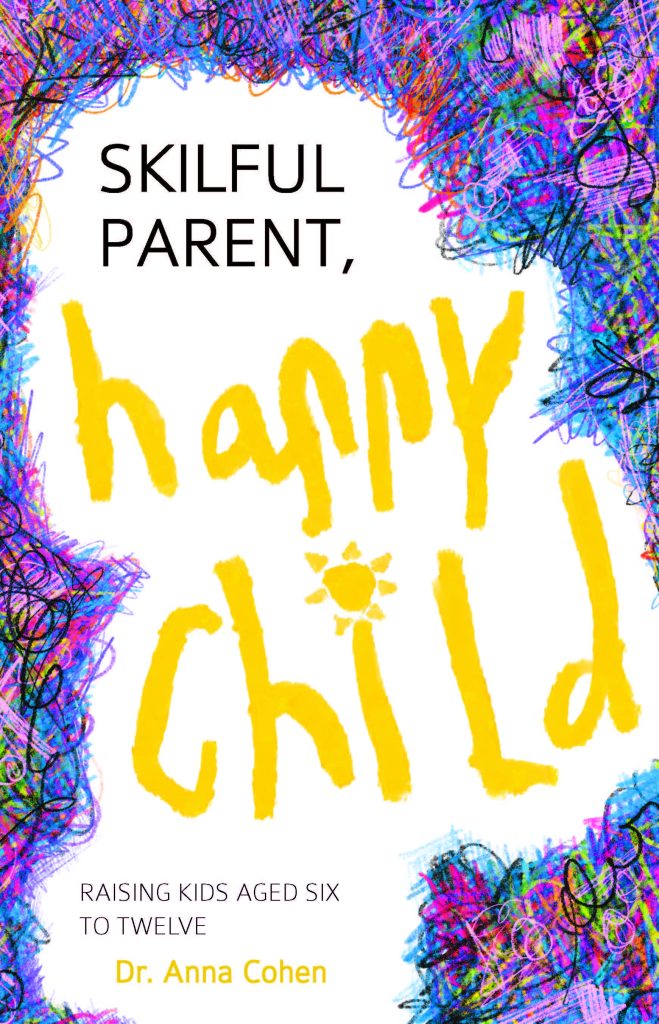
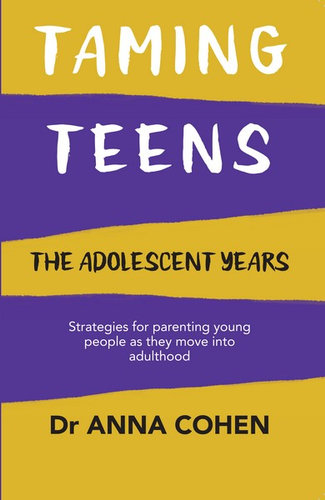
Dr Anna Cohen's parenting books share the developmental, regulation-first thinking that underpins expressive work with children. These two cover the ages this webinar works with.
Frequently asked questions
Who is this webinar designed for?
It is designed for mental health and allied health professionals who work directly with children, adolescents and families: psychologists, counsellors, social workers, mental health occupational therapists, school psychologists and others. The content sits at an intermediate-to-advanced clinical level, assuming a working familiarity with child development and core therapeutic models. New-graduate and provisional clinicians are very welcome and will get the most from it when paired with supervision.
Is the content evidence-based, and are references provided?
Yes, and we are honest about its limits. The webinar draws on the art-therapy outcome literature for children (including the Cohen-Yatziv and Regev systematic review and Huang and Tan's mixed-method study), the Expressive Therapies Continuum, and the Emotional Release Counselling tradition of Pearson and colleagues. There is little controlled-trial evidence for collage as an isolated technique, so we make the measured, evidence-informed claim rather than overselling it. A full APA 7th-edition reference list is provided.
Do I need to be "arty", or have an expensive set-up?
Not at all, and that is the whole point of collage. Because the images are ready-made, neither you nor the child needs to be able to draw. You need magazines and printed images, round-ended scissors, glue sticks and some base sheets. We show you how to curate an inclusive image-world so every child can find themselves in the pile, and how tearing (rather than cutting) works beautifully for younger or anxious children.
How practical is it? Will I actually be able to use this on Monday?
That is the entire design goal. The heart of the webinar is concrete method: identity collage, the feelings and body map, the worry collage, the future-self and hope collage, and layered work, each demonstrated and each with word-for-word lines you can lift straight into session. You leave with a safe arc and a set of methods, not just theory.
Is this safe for distressed or traumatised children?
Safety is the spine of the whole approach. The safe arc (settle, externalise, express, integrate, ground) means you never open more feeling than you can settle before the child leaves. You titrate, you keep the work inside the window of tolerance, and you always close with grounding. You assess risk exactly as you otherwise would, keep a safety plan, and work within your scope, training and supervision.
How does access work?
It is fully on demand, so there is nothing to attend. Your access arrives on enrolment, and the full recording is yours for 12 months. The recording is built to be paused: there is a ten-minute break at the midpoint and a hands-on exercise after it. A certificate of completion for 2.5 CPD hours is provided; please check with your professional association to confirm the most appropriate CPD category for your registration requirements.
Is ongoing supervision available afterwards?
Yes. The CPRC runs an Ongoing Supervision Group: a fortnightly, supervisor-led small group (six 90-minute sessions a quarter) where you bring real cases and apply the framework to your own caseload. Membership is $1,195 a quarter (about $199 a session), or $995 for your first quarter when added with this webinar, with later quarters at the standard rate; billed quarterly, no lock-in. It complements your formal supervision; check your own registration requirements. To enquire, email [email protected].
Help them make sense of it, piece by piece.
Start watching today and bring collage into your very next session.
Get instant access for $220