
Worlds in a Tray
The clinical case for sand tray and symbol work
A child reaches in, and within minutes an inner world takes shape: something you can look at, move and rebuild together. This practical, evidence-informed webinar is for psychologists, counsellors and allied health professionals working with children and adolescents, where the tray becomes a language and the child stays the author.
Because the tray is never the intervention on its own. The regulating relationship is.
Start watching straight away · 12 months' access · Certificate of completion
Presented through the Clinical Psychology Resource Centre: evidence-informed clinical training built for practitioners who want skills they can use from their very next session.
About the CPRC →More than "just playing in the sand".
When a colleague spots a sand tray on your shelf, the easy assumption is that it's there to keep little hands busy while the "real" therapy happens in the talking.
This webinar makes the serious clinical case for it: that a shallow tray of sand and a shelf of small figures is a powerful therapeutic medium, with a real and growing evidence base and clear mechanisms for why it works.
You'll leave able to explain the neurobiology to a parent or a sceptical GP, to set the room up for safety, and to run both a non-directive build and a structured, emotional-release sequence with confidence.
And running beneath all of it are two non-negotiables that turn technique into therapy: everything is guided by formulation, and the meaning always belongs to the child.

Dr Anna Cohen
Senior Clinical Psychologist · Board-approved clinical supervisor · Co-founder, CPRC
A clinical psychologist with a special interest in expressive and creative work with young people, Dr Cohen has spent close to three decades sitting beside children and the families who love them, very often with a tray of sand between them.
Learn it from someone who works this way every week. This is not theory at a distance. Dr Cohen teaches sand tray and symbol work the way she practises it: grounded in contemporary affect-regulation science, illustrated with real, de-identified session material, and held within a disciplined, child-led stance. You'll see the non-directive build and the directive emotional-release arc demonstrated through genuine cases, and learn exactly where each one fits a child's readiness, and where it doesn't.
Honest about the evidence, generous with the how. Expect candour about what the research does and doesn't yet show, paired with practical, Monday-morning detail you can use straight away.
What we'll cover together
Six focused modules across two and a half hours, with a ten-minute break in the middle, and a 30-minute self-directed practice studio to finish, hands in the sand, after Dr Cohen signs off. Tap a module to see inside.
Module 1The case for the tray20 min
The four traditions (Lowenfeld, Kalff, sandtray therapy and symbol work), the one mechanism beneath them, and the two non-negotiables: formulation, and meaning belonging to the child.
Module 2The evidence base25 min
What the outcome research actually shows: meta-analyses, effect sizes, and the strongest findings for internalising difficulties, held with honest humility about the limits.
Module 3Neurobiology and why it works25 min
Bottom-up before top-down, neuroception and the window of tolerance, co-regulation as the active mechanism, and the seven mechanisms working in concert.
Module 4Setting up and the therapist's stance25 min
The free and protected space: room, tray and collection (including the shadow figures), and the discipline that governs everything: processing without interpreting.
Module 5The session: non-directive and directive25 min
The seven-stage non-directive build and the Pearson and Wilson emotional-release arc (externalise, discharge, re-author, consolidate), walked through with real session photos.
Module 6Applications, families and safety15 min
Anxiety, anger, bullying and family change through one formulation; bringing in caregivers and groups; set-up, sensory choice, and the contraindications that keep the work safe.
Six de-identified composite cases run through the modules: Elsie, 8, and the world she couldn't say; Lachlan, 9, and the honest claim that won the referral; Theo, 6, and twenty minutes of raking; Matilda, 10, and the graveyard left undecoded; Nina, 9, and where your hands go; and Rafe, 11, shrinking the volcano.
"The tray is never the intervention on its own. The regulating relationship is, and the meaning always belongs to the child."DR ANNA COHEN · CLINICAL PSYCHOLOGY RESOURCE CENTRE
For anyone who sits with children, at any stage of your career
Grounded in clinical psychology, designed to be applied across disciplines.
Psychologists and provisional psychologists
Adding a defensible, evidence-informed expressive medium to your child and adolescent work.
Counsellors and psychotherapists
Wanting a structured, child-led way into the material talk alone can't reach.
Social workers and family practitioners
Working with family change, separation and shared care through the tray.
School counsellors and wellbeing staff
Looking for a discreet, regulating tool that works in a school setting.
Play and creative-arts therapists
Deepening your sand tray and symbol-work practice and clinical reasoning.
OTs and allied health
Who sit with children and want the "why" behind the sensory, bottom-up work.
No prior sand tray experience needed. The webinar is built from the foundation up: the traditions, the mechanism, the stance, and then the session itself.
By the end of the webinar, you'll be able to
- Distinguish the four traditions of sand and symbol work and the mechanism they share
- Summarise what the outcome research does, and does not, show
- Explain the neurobiology that lets the work calm and contain a child
- Set up a room, tray and collection that arrange the conditions for safety
- Run both a non-directive build and a directive emotional-release sequence
- Apply the work across anxiety, anger, bullying and family change, within safe limits
- Process a tray without interpreting it, leaving the meaning with the child
- Use formulation (the five P's) to choose the right approach for each child
Certificate of completion provided on completing the webinar, recording 2.5 hours of continuing professional development. Please confirm with your professional association the most appropriate CPD category for your registration requirements.
Ready to make sand tray real clinical work?
Two and a half hours with Dr Anna Cohen that will change how you sit beside a child: practical, evidence-informed, and ready to use in your very next session.
One payment · watch on demand, at your own pace · 12 months' access from purchase
Get instant accessGroup registrations (3 or more): contact us for a discount code.
What's included
- 2.5-hour pre-recorded webinar with Dr Anna Cohen: a 44-slide deck across six modules, structured, practical and session-ready
- Participant handout: key concepts, the session sequences and a clinical reference
- Full APA 7th reference list: the complete evidence base, yours to keep
- Guided 30-minute self-directed practice studio to finish: settle, build, witness, formulate and plan your first session
- Certificate of completion (2.5 CPD hours)
- Access to the CPRC clinician community for ongoing support
Questions before you buy? Email [email protected]
Take the method further
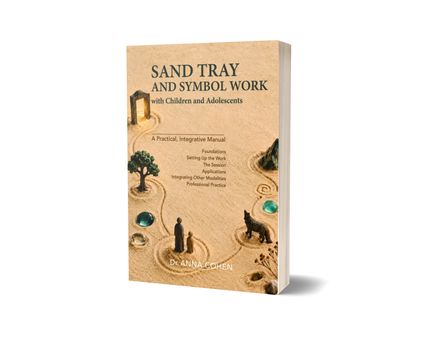
The full manual behind this webinar: setting up the work, the flow of a session, and detailed chapters on anxiety, regulation, anger, bullying, family separation, trauma, and group and family work, with 66 colour photographs of client sand trays.
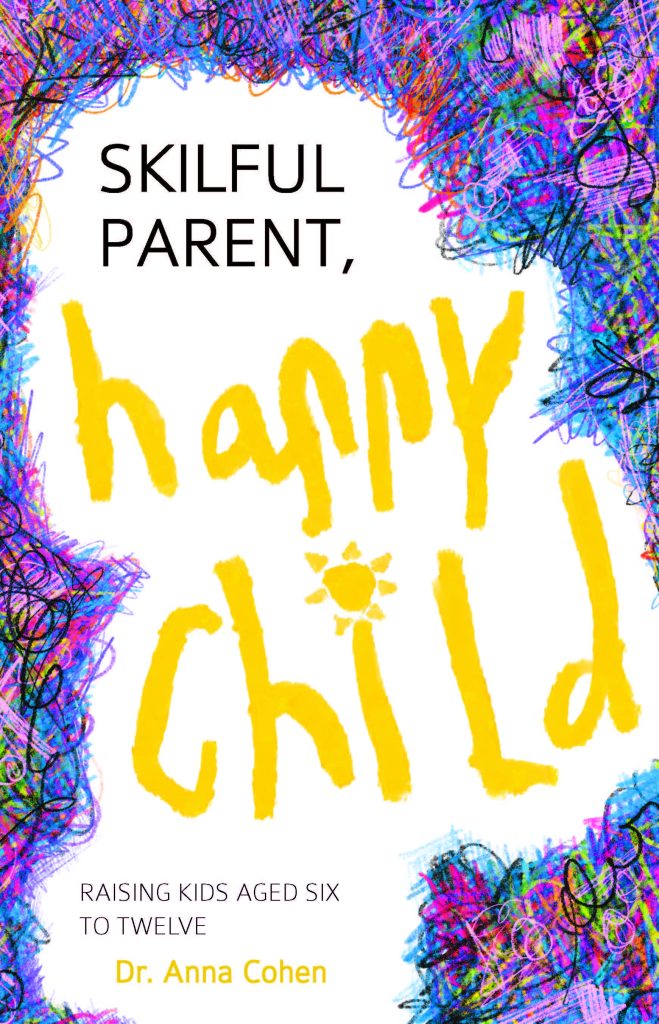
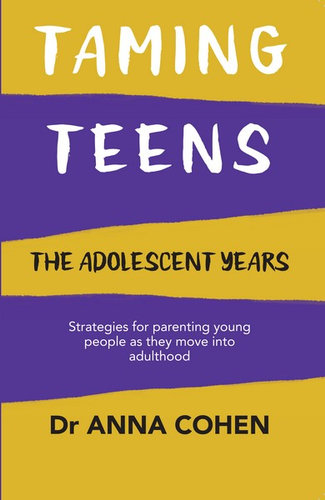
Books to recommend to parents
Never practise alone.
The clinicians who keep growing are the ones who keep showing up to a group. Our Ongoing Supervision Group is a small, fortnightly case-consultation and supervision group: bring your live cases and think them through together, alongside a standing community of child clinicians.
A standing fortnightly room
Six 90-minute sessions per quarter. Bring live, de-identified cases and think them through with a small group of child clinicians.
Led by Dr Anna Cohen and Isabel Fraser
Both board-approved clinical supervisors. Open across the full CPRC programme.
Complements your formal supervision
Billed quarterly; pause or cancel before any future quarter. Please check your own registration and supervision requirements.
Membership is $1,195 a quarter (about $199 a session), or $995 for your first quarter when added with your webinar purchase, saving $200, with later quarters at the standard rate.
Enquire about the GroupEarly in your career? The New Graduate Supervision Group
For provisional psychologists and registrars. A closed group (maximum ten, the same ten, start to finish) meeting weekly for one hour across twelve weeks. Bring any case you're carrying and have it thought through within days, not fortnights. Led by a board-approved supervisor; attendance and session records provided for your supervision logbook; payment plans available. It supplements, never replaces, the individual supervision your pathway requires: confirm hours with your principal supervisor. $2,500 for the twelve-week program (about $208 a session).
Certified Practitioner · CPRC Integrative Model
One credential across the whole span of child work (parents, children, teenagers) under a single, formulation-led method. Not a certificate that says you turned up: an independent judgement that you can do the work, and your name on the CPRC register to prove it.
Three pathways, one method
Parents, children and teenagers under a single, formulation-led model, not a patchwork of short courses.
Twelve months, your caseload
Supervised practice applied to your own real cases, with a board-approved supervisor alongside you.
Assessed and registered
A competency assessment signed off by a board-approved supervisor: Certified Practitioner status and your name on the CPRC register.
$12,850, or $11,000 if you pay upfront. Payment plans and pathway details provided when you book. A CPRC professional-development credential, not an AHPRA endorsement, specialist title or additional registration.
Ask about the certification pathwayFrequently asked questions
Do I need prior sand tray experience?
No. The webinar is built from the foundation up: the traditions, the mechanism, the stance, and then the session itself, with enough worked detail that you'll leave equipped to begin, regardless of your prior experience with sand tray or symbol work specifically.
Is this for psychologists only, or can counsellors and allied health professionals take it?
It's open to any mental health or allied health professional who works directly with children and adolescents: psychologists, counsellors, social workers, occupational therapists, play and creative-arts therapists, school counsellors and others. The framework is grounded in clinical psychology but designed to apply across disciplines.
Do I need a full sandplay set-up to use this?
No. You need a contained, shallow tray, some sand, and a collection broad enough to hold a child's world, including the difficult "shadow" figures, and enough diversity that every child finds a place for themselves. We cover the minimum viable kit, how to build the collection over time, and how to work without sand for children who find the texture aversive.
Is sand tray actually evidence-based?
There is a growing and broadly consistent body of evidence, with meta-analyses converging on medium-to-large effects, strongest for internalising difficulties such as anxiety and low mood, alongside real limitations we're candid about. The responsible position, which we teach, is that it's a credible, evidence-supported modality held with appropriate humility, used within a properly formulated plan.
Is this a live or pre-recorded webinar?
This is a pre-recorded, on-demand webinar, so there's nothing to attend live. As soon as you enrol you receive access to the full recording for 12 months, so you can watch whenever suits you, pause and revisit sections, and complete it at your own pace. The recording closes with a 30-minute self-directed practice studio you work through hands in the sand after Dr Cohen signs off. A certificate of completion (2.5 CPD hours) is issued once you've finished. Please check with your professional association to confirm the most appropriate CPD category for your registration requirements.
What's included in the participant handout?
A clinical companion you can keep: concept summaries for each module, the non-directive build and the emotional-release sequence laid out step by step, set-up and safety checklists, and the complete APA 7th reference list so you can speak to the evidence with confidence.
Is there a way to keep learning after the webinar?
Yes, two ways. The Ongoing Supervision Group is a fortnightly small-group case-consultation membership: six 90-minute sessions per quarter, normally $1,195 a quarter (around $199 a session), or $995 for your first quarter (a $200 saving) when added with your webinar purchase; later quarters bill at the standard rate, quarterly, with no lock-in. For clinicians who want the fullest pathway, certification as a Certified Practitioner of the CPRC Integrative Model involves twelve months of supervised practice and a competency assessment ($12,850, or $11,000 paid upfront). Both are optional and entirely separate from this webinar. To enquire, email [email protected].
Let the child stay the author.
Start watching today and bring the tray into your very next session.
Get instant access for $220